Circular Polarizing Filters – If there’s one thing you Need
It might be safe to say that a circular Polarizing filter doesn’t enhance your image, it actually corrects it. When shooting outdoors there is light being reflected on just about anything. Images will quickly be washed out with glare or sometimes called haze. Contrast will be reduced and saturation will suffer. A polarizer will help cut that reflection so that you can see the true colors in your image.
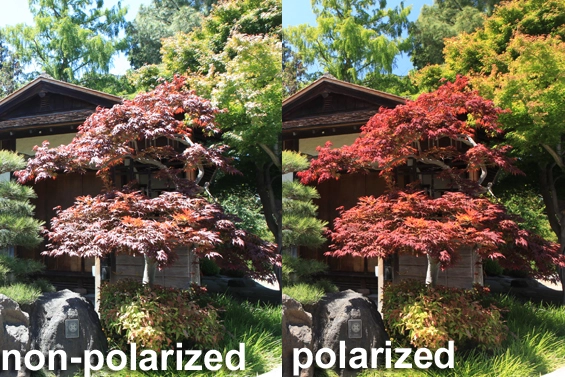
Unedited image examples of non-polarized and polarized images
We use the same Shutter, Aperture, and ISO settings in both examples above. The difference in image quality was seen when the polarizer was turned to block the stray reflections of light. The ‘blown out highlights’ in image left are not caused by poor shutter or poor aperture settings. This is caused by very bright reflections of light. Without being able to capture the details in this image, the information is lost, and there is no way to correct this in Post Processing. Even HDR photography with different exposures in this case, will not produce satisfactory results. For video capture where the image is captured in real time a CPL is a very important filter to use outdoors in bright daylight.
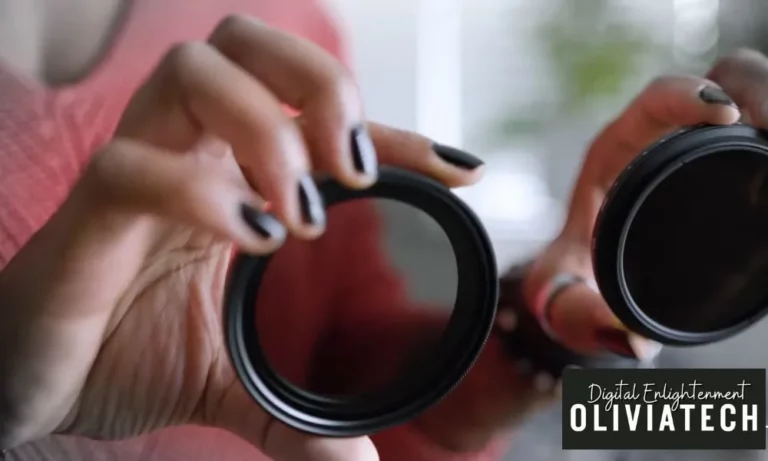
CPL filters are unlike ND filters that simply cut out the amount of light coming into the lens. A polarizer blocks light that is being reflected from a certain angle. To use a circular polarizer you attach it to the front of your lens. Part of the filter can spin around so would basically turn the filter around until the image looks good. You can see from the video (above) the results are immediate! This is not just for DSLR lenses. You should look into CPL filters for any camera or consumer camcorders (is there an iPhone version yet?). They come in different sizes according to your filter thread size, so shop accordingly.

Tiffen CPL Circular Polarizing Filters

Hoya CPL – Circular Polarizing Filter
Excellent quality filters can be found among some names like Tiffen and Hoya, but several inexpensive versions can be found starting at $3 dollars. We are using an inexpensive version for these tests. Cheaper CPL – Circular Polarizing Filters Can be Found Below:

CPL – Circular Polarizing Filters


[...] this is a video review / article you do not want to miss. Check it out [via Oliviatech.com] here: http://oliviatech.com/circular-polarizing-filters-if-theres-one-thing-you-need Tags: circular polarizers, cpl filter, dslr filter No Comments Lens Talk, Photography [...]
What would be the best way to use a circular polarizer in a run & gun video shoot?
Hi Jacob, just turn the lens as needed. You’ll immediately see results. Only best used outdoors where there could be light scatter and reflections.
Right on Olivia! I love to use a circular polarizer. I used one on this video a while back, but the richness it gives is undeniable!
http://www.vimeo.com/7284726
like ur video
Great video, it taught me something very helpful. What was the cheaper CPL that you were Using?
Hello Olivia,
I am wondering what the particular brand of CPL was used in the above shots.
Much appreciated and thanks for this explanation.
Danny
Here you go: CPL – Circular Polarizing Filters.
Not the best, but still better than not using one.
Can you use a polarizer with an ND filter?
Hi TIm, yes you can. The filters are stackable so you could put on top of the other. One problem you might run into is for wider lenses. If you stack too many filters, you could begin to see the inside of the filters.
I found that the cheaper polarizers softened the image a bit. Might not be so bad for video, but not really desired when shooting product stills etc. Thanks for the video.
Yes, you should still opt to get the higher quality CPL if you’re shooting outdoors. It will provide much better results than not using one when dealing with scattered light. For product photos that are done indoors, a CPL is not required.
my must-have accesories for outdoor photography
awesome vid!
and wow, youre so beautiful!
Great help thank you. What picture setting would you recommend using the circular polarizing filter . Sadly, for now only have Adobe essential 9 so cant do to much in post with regards to color grading
Hi Charles, the Polarizer is normally used outdoors and has more of an effect with very bright highlights (reflected light). So if you don’t plan on doing color grading, you could set it to a landscape type picture style to really boost that color and saturation. We did not use any color grading whatsoever in those examples. That was all done in real time from the camera.
Absolutely LOVED this video. I’ve owned and used polarizing filters for a while now to make the sky look prettier and cut reflections from water/windows but never thought of how much it would affect other things like leaves etc.
Great video!
[...] i’ve posted a few videos about different lens filters and how they can help improve your photos or videos or to add creativity to your shots. One reason why many people will leave filters behind is because [...]
Great video. Just to clarify, it doesn’t block light “coming from one direction.” (i.e. from above, from the right, etc.) If this were the case, all of the light coming from the water would have been blocked out and you wouldn’t see anything.
More accurately, a polarizer blocks certain angles of light. The waves that reflect off of the surface of the water are at a different angle than the waves that come from under the water. This is why fishermen use polarized sunglasses – it allows them to see the fish under the water by reducing the glare.
Thank you, Nathan! I appreciate your clarification. =) This video and the comments around it really helped me to learn. Thank you for being constructive. Your comment helped my understanding expand! Very cool…
Wow, I really had no clue about turning them! Should make for a fun weekend playing with my new knowledge! Thanks!
Hi, I have a Canon 28-135mm lens and am wondering if filters are available for zoom lens’. And if so, how would I go about finding the right size?
thanks much!
Great demo… i hope you don’t mind… i blogged it… I live in Redwood Shores, I recognize the gardens from San Mateo Central Park and the Oracle buildings in the skateboard video.
Really good demonstration.
Magnificent beat ! I wish to apprentice whilst you amend your website, how can i subscribe for a weblog site? The account helped me a appropriate deal. I had been tiny bit familiar of this your broadcast provided bright transparent idea
On the homepage at the upper right hand corner there is a button labeled “RSS FEED” click this to subscribe. =)
Hello. Very nice web site. Some good writing skills here and I’m happy to find a lot of helpful information… we want to see more thoughts in this area. Thank you for sharing!
Your comments are appreciated! More content on filters in general or on polarizers? Anything you’d like me to address in particular?
I?ve read some excellent stuff here. Definitely worth bookmarking for revisiting. I surprise how so much effort you place to create one of these great informative site.
A nice demo. It helped me deciding for a CPL filter.
Is the CPL filter supposed to turn all screens black? It makes my laptop screen a pinkish/purple color when I turn it. (It does make my desktop monitor black though).
I don’t know that it is supposed to turn all laptop monitors black..
You can’t compare polarized vs. non-polarized if you use the same exposure. The filter will eat up 1 or 2 stops.. You should let the camera calculate the exposure for both photos. If you do that I bet the difference won’t be that big. From what I see the first shot is over exposed.
Under exposing the image will not yield the same effects. It has nothing to do with exposure. Feel free to perform your own tests, and you will see how incorrect that statement is.
Excellent demonstration. THank you for putting together.
Hi Olivia. Thanks for publishing this video, I found it very helpful. I have been taking a lot of pictures of nature with my new DSLR, and was trying to figure out what I could do about the sky. This was the answer.